For decades, the foundation of the technology industry has relied on human engineers painstakingly writing, reviewing, and deploying lines of code. This era is rapidly drawing to a close. According to Boris Cherny, the creator and "father" of Claude Code at Anthropic, the act of writing software has reached a transformative inflection point: coding is essentially solved. Cherny, a seasoned engineer who previously authored textbooks such as Programming in TypeScript and even wrote early guides for programming TI-83+ calculators, has not written a single line of code by hand over the past year. Instead, he relies entirely on AI agents to architect, write, and maintain his software.
You can watch Boris Cherny's full talk on the future of software development on YouTube before diving in.
This article explores the journey from the first rudimentary autocomplete tools to a world where AI models autonomously handle 100% of the coding workload, fundamentally shifting how businesses are built, how teams are structured, and what it means to be a creator in the modern world.
The "Product Overhang" and the Genesis of Claude Code
The journey toward fully autonomous coding did not happen overnight, nor was it an immediate success. Claude Code began somewhat accidentally in late 2024 within an incubator at Anthropic known as Anthropic Labs. A small innovation team observed a phenomenon they referred to as a "product overhang," a situation where the underlying AI models possessed capabilities that no existing consumer product had yet fully captured or harnessed.
At that time, the state of the art in software development assistance was "type ahead" technology. Developers would open their Integrated Development Environments (IDEs), press the tab key, and allow models like Sonnet 3.5 to autocomplete a single line of code at a time. However, the Anthropic Labs team recognized that the models were nearly ready for a much larger evolutionary step: eliminating the need for type-ahead entirely and allowing an AI agent to write all of the code from scratch.
The initial iterations of Claude Code struggled to deliver on this vision. For the first six months, the tool was barely usable, assisting Cherny with perhaps only 10% of his code. It was released prior to achieving product-market fit, built with the deliberate intention of waiting for the next generation of AI models to catch up to the product's architecture.
The critical inflection point arrived in May with the release of Opus 4. From that moment, Claude Code experienced exponential growth, continually improving with every subsequent model release: from Opus 4.5 to 4.6, and eventually to Opus 4.7. As the intelligence of the models scaled, the platform evolved into a robust solution capable of autonomous generation, eventually leading to a product so successful that Mike Krieger, the Chief Product Officer at Anthropic and co-founder of Instagram, has returned to lead the team for its next phase of development.
The 100% AI Coding Reality
Today, the idea that a software engineer writes code by hand is becoming obsolete for those at the cutting edge. Cherny states that for him, the coding process is "100% solved". Since late last year, the AI model has written all of his code. His daily output has skyrocketed; he routinely merges a few dozen Pull Requests (PRs) every day, and recently hit a record of completing 150 PRs in a single day, simply to test the limits of what the agents could achieve.
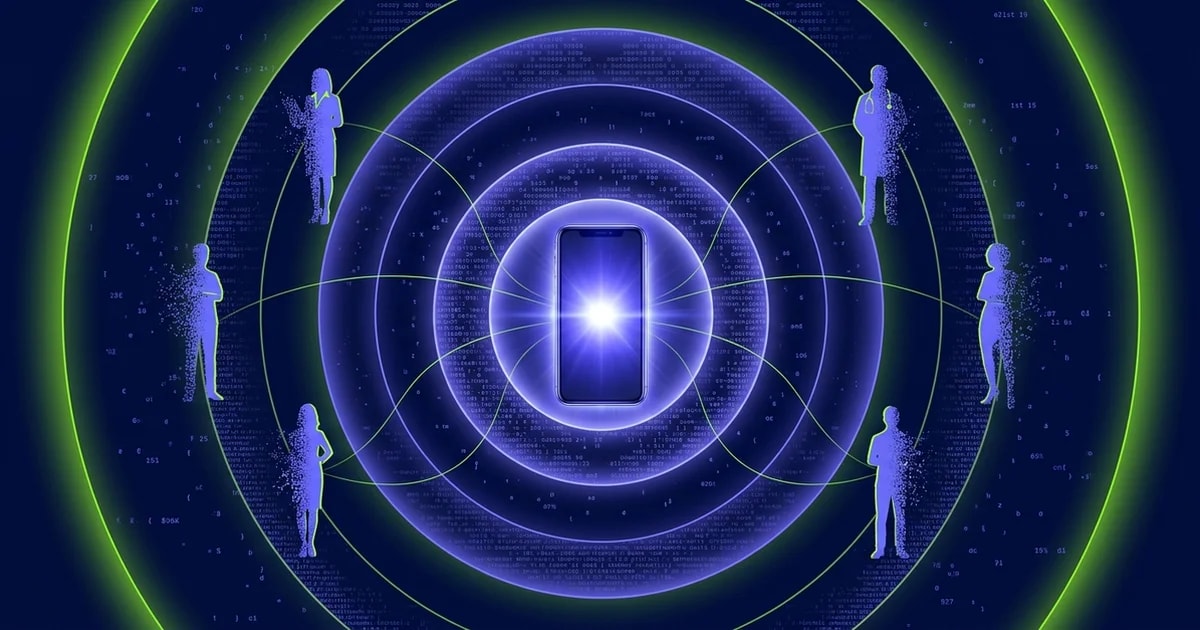
The tools and environments used to build software have also drastically shifted. While many developers historically relied heavily on Command Line Interfaces (CLIs), desktop apps, or IDEs like VS Code and JetBrains, Cherny's personal setup is radically different. Most of his work is now done directly from his mobile phone.
Using the Claude app's code tab, he manages 5 to 10 active sessions at any given time. These sessions deploy hundreds of distinct AI agents during the day, scaling up to a few thousand agents running deeper automated work overnight.
The Power of Loops and Agentic Orchestration
The secret behind this massive scaling of individual output is the utilization of sub-agents and automated cycles called "loops". Using simple tools like cron, Claude can schedule repeating jobs that run every minute, hour, or day.
Cherny utilizes dozens of these loops to manage the tedious aspects of software engineering. For instance, he runs loops that babysit his PRs, fix Continuous Integration (CI) pipelines, automatically rebase code, and patch flaky tests. He even runs loops that pull user feedback from Twitter and cluster it into digestible reports every 30 minutes.
Anthropic has also introduced "routines," which function identically to loops but run continuously on cloud servers, meaning the agents keep working even when a developer's laptop is closed. "I sort of feel like loops are the future at this point," Cherny asserts.
The models themselves are becoming proactive in this orchestration. With Opus 4.7, the AI naturally understands when to parallelize tasks. If prompted to pull a data query, the model might recognize that the data changes over time, spontaneously offer to create a continuous loop to monitor the data, and deliver automated reports via Slack using the Model Context Protocol (MCP). As models improve, the burden of figuring out how to optimize and prompt the AI shifts from the user to the model itself.
The Printing Press Moment for Software
To understand the magnitude of this shift, Cherny draws a parallel to one of the most important technological leaps in human history: the invention of the printing press in Europe in the 1400s.
Before the printing press, literacy was restricted to roughly 10% of the European population. Reading and writing were highly specialized jobs, performed by literate professionals employed by illiterate kings and lords. Following the invention of the press, the cost of a book plummeted 100x. Within 50 years, more literature was published in Europe than in the previous thousand years combined. Over the ensuing centuries, global literacy rates skyrocketed to 70%, transforming reading and writing from a rare profession into a foundational human skill.
We are currently experiencing the printing press moment for software development. Building software is transitioning from a specialized, elite engineering discipline into a democratized, universal skill, much like sending a text message or using Microsoft Office. And unlike the printing press, which took hundreds of years to reach global literacy, the democratization of software creation will happen much faster.
The implications for industry are profound. In the near future, the most qualified person to create accounting software will not be a highly trained software engineer, but rather a highly experienced accountant. Because coding is now the "easy part," deep domain expertise is what will dictate the value and quality of the software produced. Small shop owners will build their own custom internal management software, and everyday individuals will program microcontrollers to automate their environments, all without knowing a single programming language.
The Rise of the Cross-Disciplinary Generalist
As the barrier to writing code drops to zero, the very definition of a "generalist" in the tech industry is being rewritten. Historically, an engineering generalist was someone who could write code across different platforms: perhaps handling iOS, web, and server-side development simultaneously.
However, the future belongs to the cross-disciplinary generalist. When the AI can translate intent into code flawlessly, the artificial boundaries separating organizational departments dissolve.
Anthropic's own Claude Code team serves as a blueprint for this future. On their team, every single member writes code. This includes the engineering manager, the product manager, the designers, the data scientists, the user researcher, and even the finance personnel. While individuals still retain their core specialties, such as financial modeling or user interface design, everyone possesses the capability to manifest their ideas directly into the software infrastructure. The ability to code is no longer a bottleneck tightly controlled by an engineering department; it is an accessible tool leveraged by every discipline within the organization.
Internal Restructuring: How Anthropic Dogfoods the Future
If one wants to see what a fully AI-integrated tech company looks like, Anthropic's internal operations provide a compelling preview. Internally, there is no manually written code anywhere at the company. Every line of SQL is generated by models, and software is entirely built by AI.
Anthropic dogfoods their products rigorously. They utilize a cutting-edge experimental model known as Mythos, alongside the heavily relied-upon Opus 4.7, to write the vast majority of their codebase. The Claude AI agents communicate with one another continuously throughout the day; as one developer's AI works in a loop, it will automatically reach out over Slack to interface with another team member's AI to resolve unknowns and dependencies.
Interestingly, Cherny notes that the technological gap between Anthropic and the rest of the tech world is not actually rooted in access to advanced AI models. The underlying technology available to Anthropic is, or soon will be, available to developers globally. Instead, the true gap lies in organizational structure and process. Traditional companies are still structured around the manual generation of code, whereas Anthropic has fundamentally reorganized its entire operational flow to let AI orchestrate the workflows.
The "SaaS Apocalypse" and the Shifting Business Landscape
With AI driving the cost of software creation down by a factor of 10x or even 100x, the economic foundations of the Software-as-a-Service (SaaS) industry are facing a massive disruption. Some industry observers have questioned whether we are on the brink of a "SaaS apocalypse".
Cherny addresses this by referencing the "Seven Powers," a framework by Hamilton Helmer that outlines the fundamental business moats that protect companies. AI will inevitably erode certain traditional moats. For example, switching costs will become vastly less important; if a company wants to migrate from one software ecosystem to another, an AI model can seamlessly port the data and rewrite the necessary integrations. Similarly, process power, the advantage a company holds due to deeply ingrained, complex workflows, is vulnerable. Models like Opus 4.7 are capable of "hill climbing" any process; given a target metric, the AI will autonomously iterate and improve upon existing workflows until the goal is achieved.
However, AI does not destroy all business moats. Advantages rooted in network effects, economies of scale, and cornered resources will remain critical, as these are fundamentally human or infrastructural advantages that AI cannot easily replicate.
This dynamic creates an unprecedented environment for startups. Cherny predicts that the number of highly disruptive startups over the next decade will increase 10x. Small, agile teams can now build products that are just as valuable and sophisticated as those produced by massive legacy corporations. Furthermore, large enterprises carry immense structural baggage; they will face massive internal resistance as they attempt to retrain their workforces and restructure business processes that were built for the pre-AI era. Startups, unburdened by legacy processes, can build natively with AI from the ground up, allowing them to compete head-to-head with tech giants. "It's the best time to be a startup," Cherny notes.
The Extinction of Technical Debates: Infrastructure, Cloud, and Local Models
As autonomous coding models mature, many of the technical debates that occupy engineers today will become irrelevant. For instance, developers frequently debate the merits of relying on centralized, cloud-based computing versus utilizing local, open-source models that avoid throttling and latency.
Cherny's perspective on this is blunt: it doesn't matter. Within a couple of years, developers will no longer be making decisions regarding compute environments. The AI models will take over the responsibility of starting agents and building the required environments. If the AI determines that spinning up a local model is the most efficient way to execute a specific task, it will do so autonomously. The developer is entirely abstracted away from these lower-level infrastructure choices.
Connecting these AI agents to existing enterprise ecosystems is also largely a solved problem, thanks to the Model Context Protocol (MCP). MCP acts as the universal connector, allowing tools like Claude Code, the Claude CLI, and a broader platform called Co-work to instantly interface with enterprise environments like Salesforce, Google Docs, and Google Calendar.
For legacy systems that lack programmatic access or APIs, the fallback solution is "computer use". Anthropic is highly advanced in this area; their models can essentially look at a screen and operate software exactly as a human would. While it is a slower process, Opus 4.7 executes it effectively, acting as a catch-all mechanism to ensure that no digital system is out of reach for the AI. Ultimately, whether the model uses an MCP, a CLI, an API, or visual computer use, the methodology is irrelevant; to the AI, it is all just tokens.
Looking Forward: What Comes Next?
While coding itself may be solved for straightforward implementations, there are still edge cases. Very large, complex legacy codebases, and obscure, less-documented programming languages still pose a challenge. The Claude Code development process revealed that Anthropic initially used TypeScript and React for their own tools simply because those frameworks were "on distribution," meaning they were highly represented in the AI's training data, making them easier for early models to work with. Today, the model is vastly more intelligent and can pick up frameworks it has never seen before, but for the absolute most difficult edge cases, the solution is usually just to wait for the next model.
As the baseline intelligence and alignment of the models improve, the "harness" around the AI, including the safety mechanisms, prompt injections, static verification of commands, and human-in-the-loop requirements, will become less critical. The models will intuitively know the correct actions to take. In the immediate future, Anthropic is actively building new products that capitalize on this growing intelligence, including advanced tools for "Claude design," native support for massive parallelization of agents through Loop and Batch, and highly optimized computer use capabilities.
Conclusion
The era of the software engineer as a manual typist of logical syntax is ending. Driven by tools like Claude Code, the technology sector is evolving into an ecosystem orchestrated by autonomous loops, where natural language dictates intent and armies of agents execute the labor. Just as the printing press dissolved the monopoly of scribes and unleashed an explosion of literature, the democratization of software development will remove technical barriers, allowing accountants, shop owners, and cross-disciplinary generalists to shape the digital world. Coding is solved; the next frontier is limited only by human domain expertise and imagination.