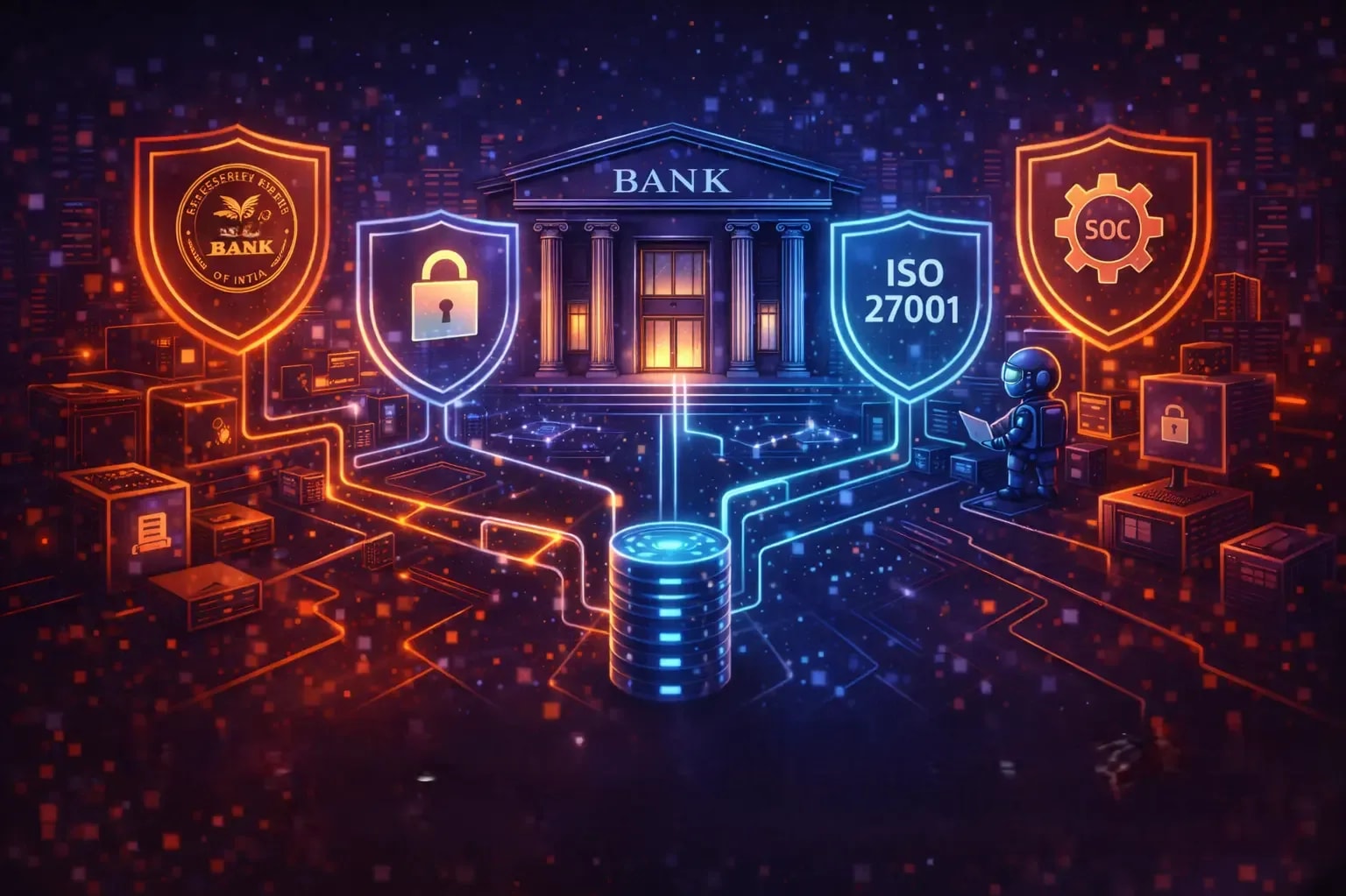
In the realm of banking compliance, Log Management Systems (LMS) augmented with AI-powered log correlation represent a transformative approach to meeting stringent regulatory demands from frameworks such as the Reserve Bank of India (RBI) guidelines, Payment Card Industry Data Security Standard (PCI-DSS), ISO 27001, and System and Organization Controls (SOC). This detailed survey explores the foundational role of logs in compliance, maps LMS and AI capabilities to specific controls, addresses implementation considerations, and provides an expanded FAQ section based on industry insights and regulatory sources. The analysis synthesizes evidence from official guidelines, case studies, and expert reports to offer a comprehensive resource for banking leadership.
The Critical Role of Logs in Banking Regulations
Logs function as immutable records of system events, user actions, and potential security incidents, forming the backbone of regulatory audits and investigations. In highly regulated environments, fragmented logging across diverse infrastructures—such as Kubernetes clusters, virtual machines, and API gateways—often leads to compliance gaps, as seen in transitions from legacy ELK stacks to advanced LMS solutions. Regulators emphasize log integrity to mitigate cyber threats and ensure financial stability, with non-compliance risking penalties up to $100,000 monthly under PCI-DSS.
Key regulatory expectations include:
- RBI’s cybersecurity framework mandates 24/7 monitoring, two-year retention for security logs, and rapid incident reporting.
- PCI-DSS Requirement 10 requires centralized logging, daily reviews, and one-year retention to protect cardholder data.
- ISO 27001 Annex A.8.15 demands tamper-proof logs and regular analysis for risk management.
- SOC 2 focuses on audit trails demonstrating control effectiveness over security and availability.
Without an AI-enhanced LMS, banks face manual overhead and alert fatigue from rule-based systems, which miss subtle patterns in high-volume data (e.g., 100K messages per second).
Defining LMS and AI-Powered Log Correlation
An LMS centralizes log ingestion, storage, indexing, and analysis using components like Graylog for aggregation, OpenSearch for search, and Fluentd for forwarding. It incorporates encryption (AES-256), role-based access control (RBAC) with LDAP integration, and automated backups via tools like MinIO for retention periods up to 180 days or more.
AI correlation elevates this by employing frameworks such as ReAct (reasoning-action loops) and CodeAct (parallel execution) to parse noisy logs with natural language processing (NLP), detect anomalies, and structure insights using the 5Ws (Who, What, When, Where, Why). This addresses limitations of traditional analysis, enabling real-time root cause analysis (RCA) in scenarios like linking payment failures to network latency.
Mapping Capabilities to Regulatory Requirements
The integration of LMS and AI directly supports compliance controls, as outlined in the following table derived from regulatory documents and industry benchmarks:
| Regulation |
Key Requirements |
LMS Features |
AI Enhancements |
Compliance Outcomes |
| RBI |
2-year retention; 6-hour reporting; SIEM monitoring. |
Automated snapshots; RBAC; alerting via Prometheus/Grafana. |
Anomaly detection; automated RCA; pattern learning. |
Faster incident response (30% reduction); proactive threat identification. |
| PCI-DSS |
Daily reviews; 1-year retention; traceability for cardholder data. |
Centralized logging, data masking, and encryption. |
Real-time transaction analysis; false positive reduction. |
Reduced fraud rates; automated daily monitoring. |
| ISO 27001 |
Log protection, regular analysis, and tamper-proof storage. |
Event synchronization; ILM policies. |
NLP for exceptions; continuous monitoring. |
Enhanced risk management; audit-ready evidence. |
| SOC 2 |
Monitoring for security, change tracking, and audit evidence. |
Performance metrics; observability dashboards. |
Predictive risk analytics; adaptability. |
Demonstrated control effectiveness; streamlined audits. |
This mapping ensures banks handle diverse environments while maintaining data sovereignty through on-premise deployments.
RBI Alignment in Depth
RBI’s IT governance requires boards to oversee cybersecurity, with LMS providing scalable architectures for 2TB daily logs. AI enables SIEM-like correlation for incident RCA, supporting corrective and preventive actions (CAPA) and reducing downtime through automated ticketing.
PCI-DSS Specifics
Requirement 10 mandates logging access to sensitive data. AI spots fraud patterns in transactions, cutting review times by 50% via benchmarks, while ensuring encryption and masking prevent unauthorized exposure.
ISO 27001 Controls
Focuses on generating protected logs for evidence. AI’s resilient fallbacks and human-readable insights align with anti-tampering needs, facilitating continuous monitoring without external data risks.
SOC 2 Principles
Emphasizes ongoing evidence. AI provides adaptable audit trails, integrating with DevOps for CI/CD compliance, as in automated feedback loops.
Audit Readiness and Operational Benefits
Centralized LMS with AI simplifies audits by enabling quick evidence retrieval, achieving 99.9% uptime, and 50% faster log access. Real-world deployments reduce bottlenecks and enhance developer productivity through automation. AI’s explainability via dashboards and human oversight ensures transparency, mitigating biases in regulated settings.
Deployment involves no-code platforms for ease, with infrastructure like GPUs for on-prem AI or AWS Bedrock for managed services, prioritizing privacy features such as PII filters
Future Outlook and Challenges
As regulations evolve, LMS will incorporate predictive AI for continuous audits. Challenges like data volume and integration are addressed via clusters and customizations. Banks should invest in training and governance to balance innovation with compliance.
FAQ
Logs are critical for traceability and breach detection. PCI-DSS requires them to monitor cardholder data access, while RBI mandates them for cybersecurity reporting.
RBI: At least two years for security logs. PCI-DSS: One year, with three months immediately accessible. ISO 27001: Based on risk, often aligned with business needs. SOC 2: 1-7 years per trust criteria.
It detects hidden patterns in real-time, reducing alert fatigue and supporting daily PCI-DSS reviews. For ISO 27001, it enables continuous analysis; for SOC 2, it provides predictive insights.
Scalability for high volumes, ensuring privacy (e.g., no data exfiltration), and integration with legacy systems. Solutions include air-gapped deployments and no-code tools.
Through metrics like 30% faster responses, 50% reduced retrieval times, and compliance cost savings. Benchmarks show processing 100K messages/second without degradation.