Introduction
As enterprises race to adopt artificial intelligence (AI) to accelerate innovation and streamline operations, a silent challenge is emerging—one that threatens to undermine the very benefits AI promises. At lowtouch.ai, a leader in no-code agentic AI, we empower organizations to transform customer experiences, optimize IT operations, and automate business processes. However, the rapid adoption of AI-generated code in agentic systems has introduced a compounding “hidden debt” that, if left unchecked, can erode long-term value.
Understanding Hidden Debt in AI-Generated Code
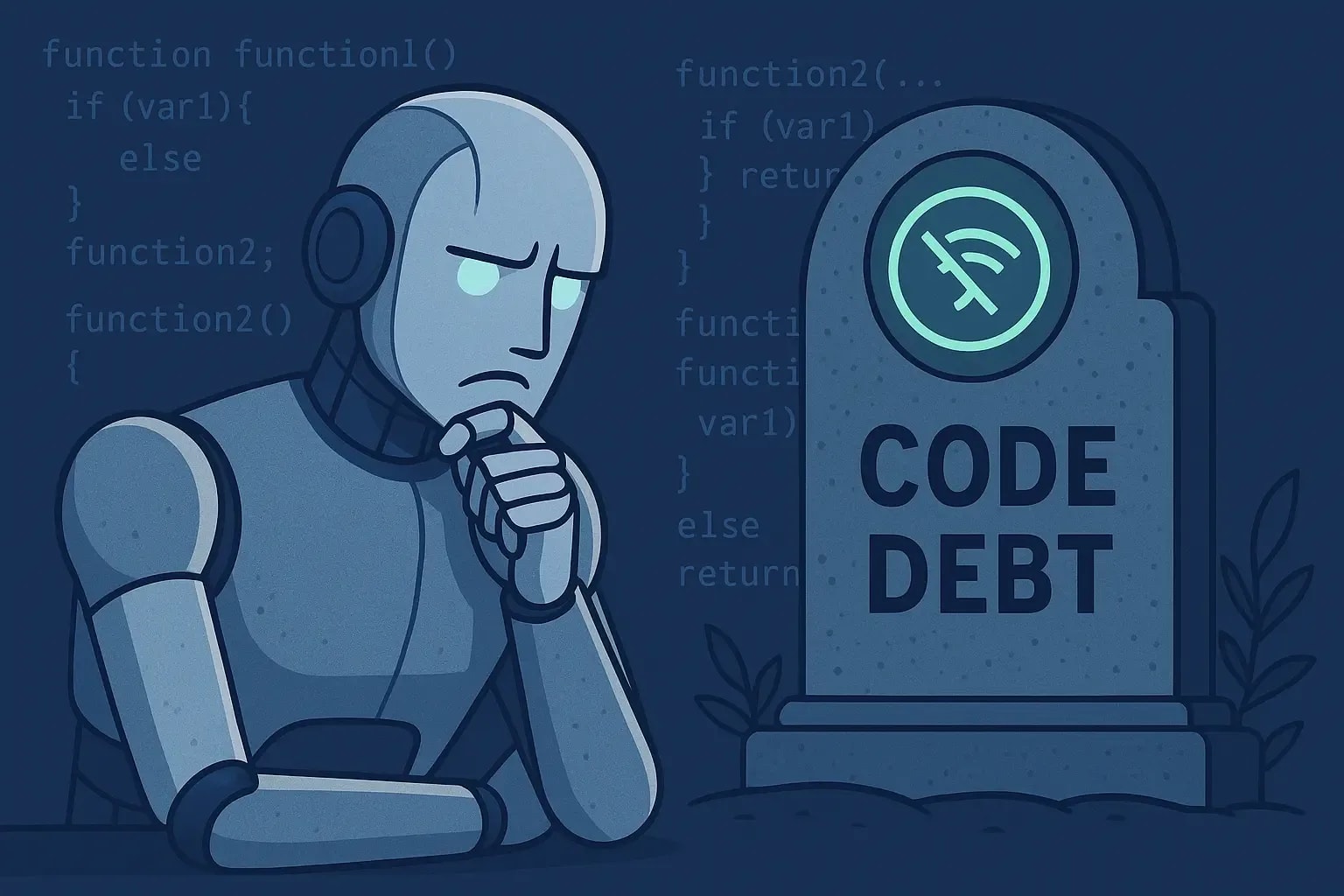
AI-generated code produced by tools such as GitHub Copilot, ChatGPT, or custom large language models (LLMs) has revolutionized the speed of software development—allowing code to be written up to 55% faster. However, this rapid development can lead to a “hidden debt,” a compounding issue where quick fixes and duplicated code accumulate over time.
Much like financial debt accrues interest, technical debt grows through:
Key Drivers of Hidden Debt in Agentic AI Systems
- **Acceleration of Code Duplication & Architectural Decay:**AI tools often generate repeated code blocks and context-blind solutions that ignore overarching system design. This leads to fragmented, brittle codebases that become increasingly difficult to maintain as business requirements evolve.
- **Comprehension Debt & Knowledge Gaps:**When AI generates functional but opaque code, developers may ship it without fully understanding its logic. This “comprehension debt” forces teams to spend extra time reverse-engineering code during debugging and updates.
- **Hidden Security & Quality Risks:**Research indicates that AI-generated code can introduce vulnerabilities through unvalidated inputs and outdated practices, which may compromise system security and stability in critical agentic applications.
- **The Productivity Illusion:**While developers can code faster with AI assistance, the increased code churn and subsequent refactoring often negate these initial speed gains, leading to higher long-term maintenance costs.
The Stakes for Enterprises
For enterprises leveraging agentic AI, the hidden debt of AI-generated code poses significant risks. If left unmanaged, it can lead to architectural decay, increased security vulnerabilities, and reduced productivity—undermining the overall benefits of automation.
Mitigation Strategies for Agentic AI Systems
To manage hidden debt effectively, enterprises should implement the following strategies:
- **AI-Augmented Reviews:**Integrate static analysis tools to flag duplicate code blocks. This helps reduce redundant code by over 40% and maintains architectural integrity.
- **Architecture Guardrails:**Enforce API contracts and coding standards via LLM prompts to align AI-generated code with existing system designs and prevent context-blind implementations.
- **Continuous Retraining:**Deploy quality assurance pipelines that validate AI outputs against security and performance benchmarks, catching a significant portion of vulnerabilities early.
- **Comprehension Checks:**Require documentation and “explain-back” validations for AI-generated code so that teams fully understand and can maintain the systems they deploy.
The Path Forward with lowtouch.ai
At lowtouch.ai, we’re addressing these challenges head on with our no-code agentic AI platform. By emphasizing secure, private deployments and incorporating robust quality checks into our workflows, we minimize the risk of hidden debt while accelerating digital transformation. Our approach empowers enterprises to deploy intelligent agents that can evolve with their business needs, ensuring long-term sustainability and efficiency.
Let’s Connect
I invite you to join the conversation on managing AI-generated code and mitigating technical debt in autonomous agentic systems. How is your organization addressing these challenges? Connect with me on LinkedIn or drop a comment below. Together, we can build a sustainable AI future—one that maximizes innovation while keeping hidden debts at bay.