Introduction
As artificial intelligence (AI) continues to evolve, the way we interact with AI models has undergone a significant transformation. In the early days of large language models (LLMs), crafting the perfect prompt was the key to unlocking their potential. However, as AI systems have become more sophisticated—capable of multi-step reasoning, autonomy, and persistent memory—a new skill has emerged as critical: context engineering. This blog post explores why context engineering is the future of AI development, how it differs from prompt engineering, and how it’s transforming the way we build intelligent systems. Whether you’re a prompt engineer, AI product manager, technical founder, or enterprise tech leader, understanding this shift is essential for staying ahead in the rapidly changing AI landscape.
What Is Context Engineering?
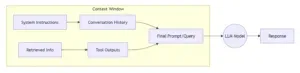
Context engineering is the art and science of curating and managing the information and tools provided to an AI model, particularly LLMs, to ensure they can perform tasks effectively. While prompt engineering focuses on designing a single, well-crafted prompt, context engineering takes a broader view, encompassing everything the model “sees” before generating a response. According to Tobi Lutke, it’s about “providing all the context for the task to be plausibly solvable by the LLM” (source).
Key components of context include:
- System Prompts: Initial instructions that define the model’s behavior, such as rules, examples, or guidelines.
- Retrieved Information: Data pulled from external sources like databases, knowledge bases, or APIs to provide relevant background knowledge.
- Memory: Persistent storage of past interactions or task history, enabling the model to maintain continuity over time.
- Tools and APIs: Access to external functions or services that the model can use to execute tasks, such as calculations or data retrieval.
For example, in a customer support scenario, context engineering might involve providing the AI with the user’s conversation history, access to a company knowledge base, and tools to query a CRM system. This holistic approach ensures the AI has the necessary information to understand the task, maintain coherence, and produce accurate outputs.
| Aspect |
Prompt Engineering |
Context Engineering |
| Focus |
Crafting a single, effective prompt |
Managing the entire context ecosystem |
| Scope |
Single interaction or task |
Multi-turn, multi-step workflows |
| Components |
Instructions, examples |
System prompts, retrieved data, memory, tools |
| Use Case |
Simple Q&A, one-shot tasks |
Autonomous agents, complex workflows |
| Failure Mode |
Poorly worded prompt |
Inadequate or poorly managed context |
Why Prompting Alone Falls Short in 2025 AI Workflows?
In the early days of AI, a well-written prompt was often sufficient to elicit the desired output. However, as AI systems have evolved into multi-turn, memory-capable agents, relying solely on prompt engineering has become inadequate. Modern AI workflows require systems to handle complex, ongoing tasks, such as:
- Multi-Step Reasoning: AI agents often need to perform sequences of tasks, like analyzing data, generating reports, and sending notifications. A single prompt cannot encapsulate all the nuances of such workflows.
- Autonomous Systems: Autonomous AI agents must operate independently, making decisions based on ongoing context rather than a static prompt. This requires access to persistent memory and external tools.
- Context-Driven Memory Architectures: Techniques like retrieval-augmented generation (RAG) and episodic memory enable AI to draw on vast amounts of information. Managing this context effectively is key to avoiding failures.
- User Intent Modeling: Across workflows, AI must understand user intent over time, not just in a single interaction. This requires maintaining and updating context as the conversation or task progresses.
Industry insights, such as those from Andrey Karpathy, liken LLMs to operating systems, with the context window acting as the model’s “RAM” (source). Most failures in AI agents today are not due to model limitations but rather to inadequate context. As noted in a LangChain blog, “Most of the time when an agent is not performing reliably, the underlying cause is that the appropriate context, instructions, and tools have not been communicated to the model” (source).
Where Context Engineering Shines
Context engineering is particularly powerful in real-world applications where AI needs to handle complex, ongoing tasks. Here are some examples:
- Customer Support Agents: By maintaining conversation history and accessing knowledge bases, AI can provide more accurate and personalized responses. For instance, if a user mentions a previous issue, the AI can retrieve that information to offer a seamless resolution, improving customer satisfaction.
- Financial Report Generators: Integrating real-time data feeds and historical records allows AI to generate comprehensive reports tailored to specific business needs, ensuring accuracy and relevance.
- Design Assistants: Understanding project requirements and user preferences over time enables AI to offer more relevant suggestions, streamlining the creative process.
- Multi-Modal Pipelines: Managing context across different data types (text, images, audio) ensures AI can process and integrate information from various sources effectively, such as in content creation or data analysis.
These use cases demonstrate how context engineering transforms AI from a tool for isolated queries into an intelligent assistant that adapts to ongoing tasks and user needs. For example, Lowtouch.ai’s no-code platform leverages context engineering to enable enterprises to build private AI agents that integrate seamlessly with existing systems, enhancing automation and customer experiences (source).
Framework for Good Context Design
Building effective context for AI systems requires a structured approach. Here’s a starter framework for designing good context:
1. Identify Necessary Context
- Determine what information the AI needs to perform the task.
- Consider user profiles, task histories, domain-specific knowledge, and any other relevant data.
2. Source Context
- Decide where to obtain the context from.
- Common sources include databases, APIs, user inputs, and pre-trained knowledge graphs.
3. Format Context
- Present the context in a way the AI can easily understand.
- Use structured formats like JSON or natural language descriptions, depending on the task.
4. Manage Context Scope
- Be mindful of the model’s context window limitations.
- Prioritize the most relevant information and use techniques like summarization or chunking for longer contexts.
5. Persist Context
- Use memory mechanisms like vector databases or key-value stores to retain important information across interactions.
- This is crucial for maintaining continuity in multi-turn conversations or long-term tasks.
For example, Lowtouch.ai emphasizes using vector databases for context in their AI agent scaffolding, enabling dynamic knowledge retrieval for scalable automation (source).
| Step |
Description |
Tools/Frameworks |
| Identify Necessary Context |
Determine the required: what the AI needs |
User profiles, task histories, and knowledge bases |
| Source Context |
Obtain context from relevant sources |
Databases, APIs, knowledge graphs |
| Format Context |
Structure context for AI comprehension |
JSON, natural language descriptions |
| Manage Context Scope |
Prioritize and manage context within limits |
Summarization, chunking techniques |
| Persist Context |
Retain information across interactions |
Vector databases, key-value stores |
How to Start Building This Skill
For those looking to transition from prompt engineering to context engineering, here are practical steps to develop this skill:
1. Learn About AI Agents:
- Understand how AI agents work and the role of context in their operation.
- Resources like LangChain’s documentation and tutorials are excellent starting points (source).
2. Experiment with Tools:
- Use platforms like LangChain, LlamaIndex, or Lowtouch.ai to build and test AI agents with different context management strategies.
- Lowtouch.ai’s no-code platform simplifies the creation of private AI agents, making it easier to experiment with context engineering (source).
3. Study Real-World Examples:
- Analyze case studies and blog posts from companies like Lowtouch.ai, which are at the forefront of agentic AI development.
- Their work on rethinking AI agent scaffolding and leveraging vector databases for context is particularly insightful (source).
4. Join Communities:
- Participate in forums, attend webinars, and engage with other AI professionals to stay updated on the latest trends and best practices.
- Events like Lowtouch.ai’s “Agentic AI in Action” Tech Talk provide valuable insights (source)
5. Build Small Projects:
- Start with simple projects, such as creating a chatbot with memory or an AI assistant that retrieves information from a database.
- Gradually scale up to more complex multi-agent systems.
Conclusion
As AI systems become more advanced, the ability to engineer effective contexts will be the key differentiator between successful AI implementations and those that fall short. Context engineering is not just a technical skill—it’s a strategic one that will define how intelligent systems behave in the future. By mastering this skill, developers can build more robust, intelligent, and scalable AI systems that meet the demands of tomorrow’s applications.
We encourage you to explore the possibilities of context engineering and see how it can transform your AI projects. For more insights and to learn from industry leaders, check out resources like Lowtouch.ai, which is pioneering no-code agentic AI platforms for enterprises (source). Rethink how you design AI systems, and embrace the future of AI development.