If you feel like artificial intelligence is moving faster than you can keep up, you are not alone. In the span of just a few weeks, the technology landscape has been completely disrupted by a new open-source project called OpenClaw, which has rapidly become the most popular open-source project in the history of humanity. To put this astronomical rise into perspective, OpenClaw achieved more adoption and growth in a mere few weeks than Linux managed to achieve in 30 years. Its adoption curve on charts is essentially a vertical line, dwarfing the historical growth rates of massive platforms like Facebook.
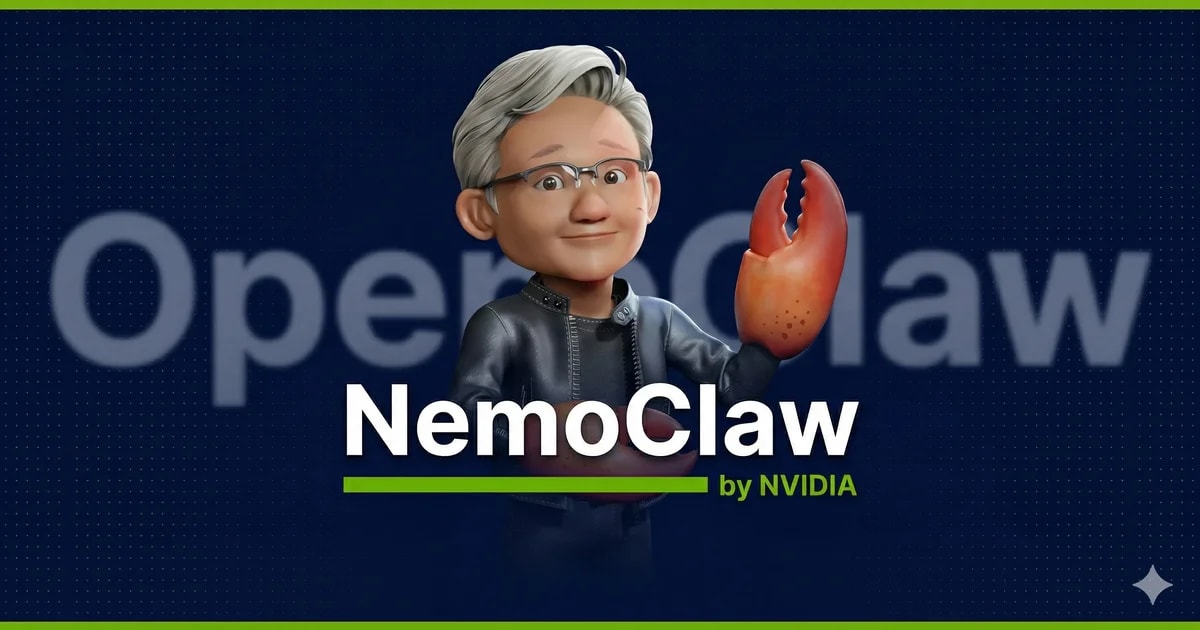
But what exactly is this groundbreaking software, and why did tech titan Nvidia just step in to create their own enterprise-optimized version called Nemoclaw?
Here is a comprehensive breakdown of what Nemoclaw means for the future of business, the underlying economics driving it, the collapse of traditional knowledge work, and why it is ushering in what experts have officially dubbed the "Organizational Singularity".
The OpenClaw Phenomenon: The Ultimate "Unhobbling"
To understand the monumental impact of Nemoclaw, you first have to understand the foundation it is built upon: OpenClaw. Written by developer Peter Steinberger, OpenClaw has been described by AI experts as the biggest AI "unhobbling" since ChatGPT upgraded GPT-3 back in 2022.
At its core, OpenClaw is a 24/7 headless agent that builds on top of the existing tech stack, leveraging both large language models and advanced reasoning models underneath. Unlike earlier iterations of AI where a user had to sit at a keyboard and prompt a chatbot for a specific output, OpenClaw operates continuously with minimal human intervention. It is an agentic system designed to drive recursive self-improvement within complex workflows.
However, while the open-source version of OpenClaw is wildly powerful, it carries significant security issues and operational dangers for large-scale enterprise use. Corporate leaders recognized its potential immediately, but they needed a way to deploy it safely within their proprietary networks.
Enter Nvidia's Nemoclaw
Nvidia, under the leadership of Jensen Huang, is no longer just a chip company; they are aiming to own the infrastructure that powers physical AI, data centers in space, and digital agents across the globe. Recognizing the massive demand for secure agentic workflows, Nvidia announced their direct support for this ecosystem with the launch of Nemoclaw.
Nemoclaw is Nvidia's strategic move to optimize this powerful agentic framework for the enterprise across their full hardware and software stack. By packaging this technology with Nvidia's secure, proprietary infrastructure, Nemoclaw specifically solves the security vulnerabilities inherent in the open-source version of OpenClaw. Nvidia is effectively building a massive ecosystem, putting their hardware and production capabilities at the center, and allowing the world to drive radical innovation at the edges.
This announcement has monster implications. Industry insiders are calling it the biggest thing to hit the enterprise world in decades because it provides a safe, secure environment for companies to deploy AI agents at scale.
Nvidia is not the only tech giant capitalizing on this enterprise demand. Amazon has made a similarly aggressive push by making OpenClaw available to run securely within AWS Bedrock. Previously, businesses struggled to integrate AI because employees were stuck manually cutting and pasting text out of enterprise emails and Slack channels to feed into models like Claude or OpenAI. Now, with OpenClaw running securely in AWS or via Nvidia's Nemoclaw, these agents are instantly connected to enterprise emails and internal systems, making deployment trivially easy.
Crossing the Threshold: The Organizational Singularity
With secure, enterprise-ready platforms like Nemoclaw hitting the market, we are crossing a definitive threshold. Experts have even marked the date (March 16th, or simply St. Patrick's Day for easy remembering) as the official arrival of the "Organizational Singularity".
Currently, corporate AI projects frequently fail because organizations attempt to force AI into flawed, human-to-human workflows. Human workflows are inherently bogged down by frailty: latency, emotional friction, and basic time delays (such as waiting days to see if a colleague will respond to an email).
The Organizational Singularity changes this entirely. Once businesses deploy agent-to-agent workflows using tools like Nemoclaw, these agents will recursively optimize processes on their own, causing traditional human-to-human workflows to essentially evaporate. Agents that communicate and execute tasks in milliseconds simply cannot be outpaced by human latency.
To survive this monumental shift, every single organization in the world (from massive public corporations to nonprofits and government departments) must completely restructure. The implications for government alone are profound, as the public sector is heavily reliant on prescriptive processes, past approvals, and manual renewals. The new mandate for survival is singular: organizations must create an AI-centric operating system at the edge of their enterprise and transition all traditional workflows over to AI agents.
The Economics of Abundance: Why Now?
The rapid deployment of systems like Nemoclaw is being fueled by an unprecedented plunge in the cost of AI compute, specifically at the "inference" level (the compute used when the AI is actually thinking and generating responses).
According to OpenAI's Sam Altman, the cost to get a correct answer to a hard problem has plummeted by roughly 1,000x in just 16 months, moving from their first reasoning model (O1) to their latest (GPT-5.4). Historically, for 40 years of neural network research, no one cared about inference time because training the models was the primary bottleneck. Now, with breakthroughs in chain-of-thought reasoning, inference time compute can be used to build smarter AI rapidly.
Because of this massive cost hyper-deflation, businesses can now afford to deploy thousands of recursive agents across their entire organization. This explosive demand for inference compute is exactly why Nvidia is predicting an astonishing $1 trillion in revenue by 2027.
The Collapse of Traditional Knowledge Work
As Nemoclaw and similar systems take over business workflows, the impact on human employment (specifically knowledge work) will be severe and immediate. We are already seeing the leading edge of this disruption in higher education.
Recent data tracking university placements reveals a catastrophic collapse in computer science graduate hiring. In the fall of 2023, 89% of computer science students were placed in jobs with an average starting salary of $94,000. Fast forward to the spring of 2026, and that placement rate has plummeted to just 19%, with starting salaries dropping below $61,000. As one observer noted, these students mortgaged their futures for careers that literally evaporated while they were sitting in class.
The harsh reality is that traditional knowledge work (writing code, managing spreadsheets, querying SQL databases, and building user interfaces) is increasingly being automated by AI. The value of a traditional computer science degree is approaching zero as AI-driven peer-to-peer meritocracy replaces top-down credentialing.
So, what happens to the humans?
In this new paradigm, human beings will transition out of daily operational workflows. Instead, their roles will shift to oversight, exception handling, and monitoring the overall system. Experts predict that highly optimized companies of the future will be run by just 20% to 25% of their current employee base.
For young professionals and students, the advice from Silicon Valley veterans is stark: the ladder of traditional corporate employment has been pulled up. The primary viable career path forward is to become a creator or an entrepreneur. Individuals must focus on finding their passion, becoming experts in problem spaces rather than specific technical skills, and joining startup cap tables.
From Digital Agents to Physical AI: The Corporate Singularity
While Nemoclaw revolutionizes digital workflows, this singularity is not confined to the digital realm. The next frontier is manipulating the physical world, moving from digital "bits" to physical "atoms".
Major tech leaders are already making their moves. Travis Kalanick, the founder of Uber, recently emerged from years of secrecy to announce a new venture aimed at digitizing the physical world. By treating manufacturing as the CPU, real estate as the storage, and transportation as the network, he is building a physical "food computer" utilizing wheel-based robotics.
This push into the physical world aligns with what has been termed the "Corporate Singularity". Industry analysts predict that massive logistics companies like Amazon will soon be the first to reach a state where they employ more robots than human beings. As robotic systems become faster, more reliable, and capable of operating 24/7 without fatigue, the economic incentive to replace manual physical labor with robotics becomes insurmountable.
What This Means for Enterprise Leaders
The arrival of Nemoclaw removes the last barrier holding enterprises back from full agentic deployment: security. The open-source version was powerful but operationally unsafe at enterprise scale; Nvidia's packaging solves that in one move.
For organizations running complex operational workflows today, the transition path is clear. First, audit your existing human-to-human processes for latency bottlenecks; those are the workflows that agent-to-agent automation will eliminate first. Second, deploy with human-in-the-loop (HITL) controls built in from the start, not bolted on after. Agents that escalate to a human reviewer at confidence threshold violations are not a limitation; they are the compliance and governance architecture that regulated industries require.
At lowtouch.ai, our agentic workflow platform is built on exactly this architecture: private-by-design deployment within your own infrastructure, HITL approval gates at every high-risk decision point, and no-code configuration so your operations team owns the workflow rather than your engineering backlog. The Organizational Singularity does not require you to bet your security posture on a public cloud deployment. It requires an AI-centric operating system that meets your infrastructure requirements and your compliance requirements simultaneously.
The transition from human-to-human corporate friction to seamless agent-to-agent workflow optimization is no longer a futuristic theory; it is a present-day reality. The integration of tools like Nemoclaw into secure enterprise environments means the barriers to agentic adoption have been entirely removed.
For businesses, the mandate is clear: adapt your workflows to agentic systems, build your AI-native operating system at the edge, or risk rapid obsolescence. For individuals, the message is equally urgent: abandon the pursuit of easily automated knowledge work, lean into creativity, problem-solving, and entrepreneurship, and prepare to manage the agents rather than competing with them. The Organizational Singularity is here, and it is reshaping the foundation of human enterprise.