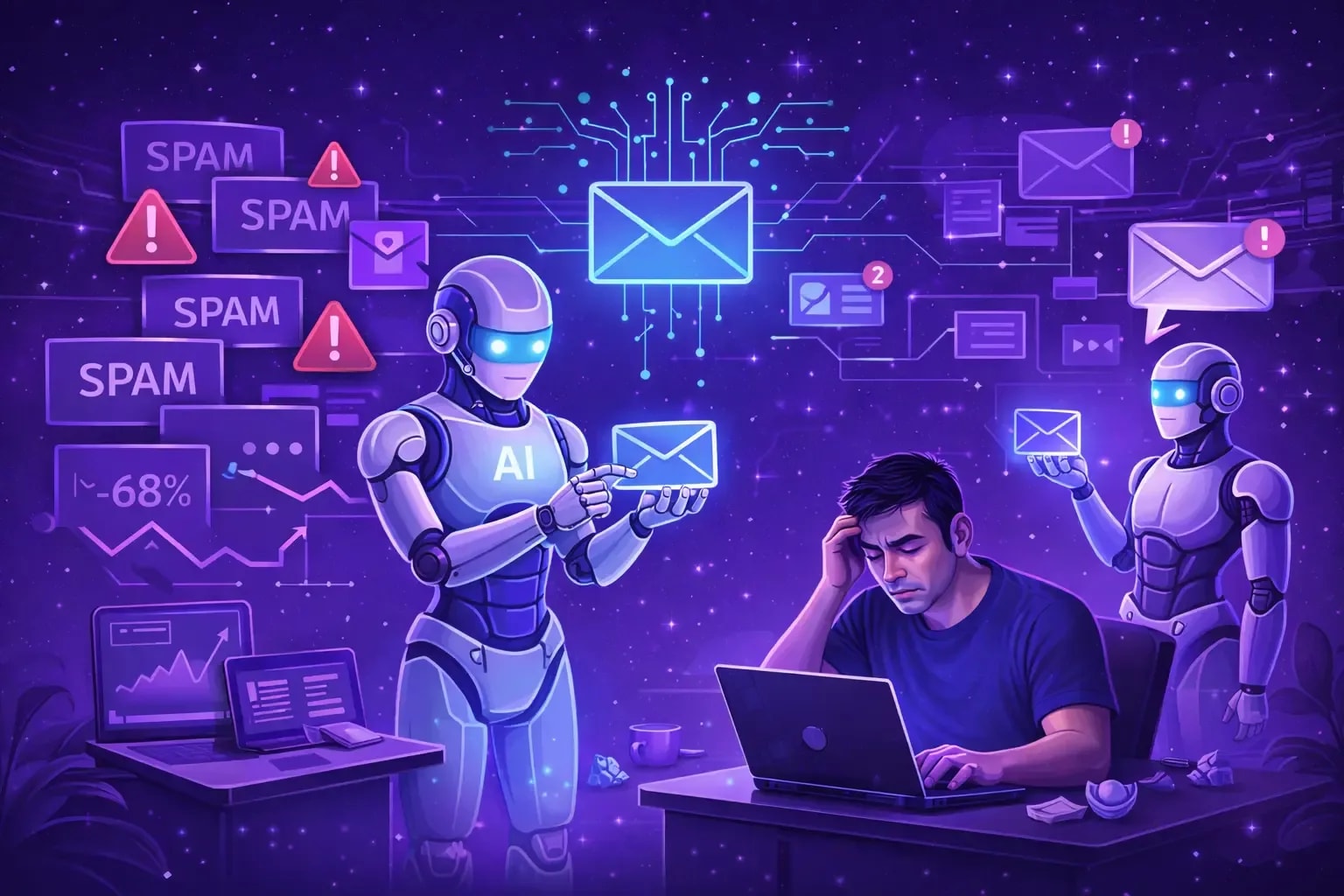
Introduction: The AI Hype in Email Marketing
Email marketing remains a cornerstone for building customer relationships and driving revenue, but the integration of artificial intelligence has introduced both opportunities and challenges. Many marketers have embraced AI tools to automate tasks like content generation and segmentation, drawn by promises of efficiency and scale. However, this enthusiasm often overlooks the nuances of audience psychology and campaign strategy, leading to suboptimal results.
What are the biggest email marketing pitfalls when using AI? Over-reliance on automation without human oversight, generating generic content, and ignoring data quality are among the top issues, resulting in lower open rates, higher unsubscribes, and diminished trust.
In this article, we’ll dissect these problems and provide actionable guidance to harness AI’s potential without compromising campaign effectiveness.
Why Email Marketing Is Especially Sensitive to AI Misuse?
Email is a direct, personal channel where recipients expect relevance and authenticity. Unlike social media or display ads, emails land in inboxes, a space users guard closely against spam or irrelevance. AI misuse amplifies risks here because algorithms lack innate understanding of human emotions, cultural contexts, or subtle brand tones. Poorly implemented AI can produce content that feels robotic or off-target, eroding trust and triggering spam filters.
Deliverability is another critical factor. AI-driven campaigns with high bounce rates or complaint volumes can damage sender reputation, as email service providers use machine learning to detect patterns of abuse. This sensitivity stems from email’s lifecycle nature: nurturing leads from awareness to loyalty requires precise timing and personalization, areas where unchecked AI often falters.
Why does AI-generated email content fail? It frequently lacks emotional depth, contextual awareness, and originality, leading to disengaged audiences who perceive messages as insincere or irrelevant.
The Most Common AI Email Marketing Pitfalls
Marketers eager to leverage AI often fall into traps that undermine their efforts. Below, we outline key issues with explanations of their impact.
Over-automation without strategy
Many teams deploy AI for tasks like scheduling and segmentation without a foundational strategy, treating it as a plug-and-play solution. This leads to mismatched messaging, where emails are sent en masse without considering business goals or customer journeys. Result: Increased unsubscribes and stagnant revenue, as campaigns fail to address real needs.
Generic AI-written copy and tone mismatch
AI excels at producing text quickly but often generates bland, repetitive content that doesn’t align with brand voice. For instance, it might overuse formal language in a casual brand’s emails, creating a disconnect. This reduces engagement, as readers sense the lack of human touch, leading to lower click-through rates and trust erosion.
Ignoring audience context and lifecycle stage
AI tools may segment based on basic data but overlook lifecycle nuances, like sending promotional emails to new subscribers who need nurturing first. Without context, campaigns feel intrusive, boosting spam reports and harming conversions.
Poor data quality feeds AI systems
Garbage in, garbage out: AI relies on clean data for accurate predictions. Outdated lists or unverified emails lead to irrelevant personalization and high bounces, damaging deliverability. This pitfall amplifies errors at scale, reducing overall campaign ROI.
Over-personalization that feels invasive
Pushing boundaries with excessive data use, like referencing unrelated behaviors, can creep out recipients. AI might infer too much without consent, violating privacy norms and prompting unsubscribes.
Neglecting deliverability and sender reputation
AI-optimized send times or content can inadvertently trigger filters if not monitored. High-volume automated campaigns without warm-up protocols risk blacklisting, as providers scrutinize engagement metrics.
These email automation mistakes collectively lower engagement by 20-30% in affected campaigns, as per industry benchmarks, emphasizing the need for balanced implementation.
Real-World Examples of AI Misuse in Email Campaigns
To illustrate these pitfalls, consider a cosmetics brand that used AI for invoice fraud attempts, impersonating executives with generic, error-prone emails that raised suspicions and led to complaints. Recipients marked them as spam, tanking deliverability.
Another case: A cloud services provider automated “upgrade” emails post-outage, ignoring context. The tone-deaf messaging frustrated customers, spiking unsubscribes by 15%.
In B2B, a cybersecurity firm scraped LinkedIn data for AI-personalized outreach, but generic tones and privacy oversteps resulted in backlash and platform bans. These examples show how misuse leads to lost trust and revenue.
How AI Should Actually Be Used in Email Marketing
How should AI be used in email marketing? As an augmentation tool within a human-led strategy, it focuses on data-driven enhancements while maintaining authenticity and ethics.
Strategy-first AI adoption
Begin with clear objectives, like improving open rates, before selecting AI tools. Align AI with overall marketing goals to avoid tactical shortcuts.
Human-in-the-loop workflows
Always involve human review for AI-generated content. Edit for tone, add personal insights, and test for relevance to prevent robotic outputs.
AI for augmentation, not replacement
Use AI to analyze data and suggest ideas, but let humans craft the final message. This balances efficiency with creativity.
Ethical personalization and consent-aware targeting
Leverage AI for hyper-personalization based on consented data only. Focus on value-adding insights, like behavior-based recommendations, while respecting privacy.
When implemented correctly, these email marketing best practices can increase CTR by 13% and revenue by 41%.
Framework: A Smarter AI-Driven Email Marketing Workflow
Adopt this step-by-step framework to integrate AI effectively:
- Define Goals and Audit Data: Set KPIs and ensure data quality.
- Segment Audiences Intelligently: Use AI for dynamic segmentation based on behavior.
- Generate and Refine Content: AI drafts; humans edit for brand alignment.
- Optimize Timing and Testing: AI predicts send times; A/B test variations.
- Monitor and Iterate: Analyze metrics post-send and adjust.
| Step |
AI Role |
Human Role |
Expected Outcome |
| 1. Goals & Data |
Data cleaning |
Strategy setting |
Clean foundation |
| 2. Segmentation |
Predictive grouping |
Validation |
Relevant groups |
| 3. Content |
Draft generation |
Tone refinement |
Authentic copy |
| 4. Optimization |
Timing suggestions |
Test oversight |
Higher opens |
| 5. Monitoring |
Analytics insights |
Decision-making |
Continuous improvement |
This structure minimizes risks while maximizing AI’s strengths.
Metrics That Matter When Using AI in Email Campaigns
Track beyond basics: Focus on engagement depth like forward rates and conversion attribution. AI-specific metrics include personalization effectiveness (e.g., unique open rates per segment) and error rates in generated content.
| Metric |
Why It Matters |
Target Benchmark |
| Open Rate |
Indicates subject line success |
20-30% |
| Click-Through Rate (CTR) |
Measures content relevance |
2-5% |
| Conversion Rate |
Ties to revenue |
1-3% |
| Unsubscribe Rate |
Signals irritation |
<0.5% |
| Spam Complaint Rate |
Affects deliverability |
<0.1% |
| Bounce Rate |
Reflects data quality |
<2% |
se AI dashboards for real-time tracking to spot issues early.
Future Outlook: What Sustainable AI Email Marketing Looks Like
Looking ahead, AI will enable true 1:1 personalization at scale, with predictive analytics forecasting needs before they’re expressed. Sustainable practices will emphasize ethical AI, with regulations ensuring consent and transparency. Expect AI to handle complex tasks like dynamic content assembly, but always with human oversight to maintain trust.
Integration with other channels, like SMS, will create omnichannel experiences, boosting overall performance while prioritizing user privacy.
Conclusion: Using AI Without Losing Trust or Performance
AI holds immense potential for email marketing, but success hinges on avoiding common pitfalls through strategic, human-centered use. By focusing on quality data, ethical personalization, and continuous monitoring, marketers can enhance campaigns without alienating audiences. Implement the frameworks discussed to turn AI into a true ally, fostering long-term engagement and conversions.
FAQ
Over-automation without strategy, generic AI-generated copy, poor data quality, and invasive over-personalization. These cause lower engagement, higher unsubscribes, and damaged sender reputation because AI often misses nuance, emotion, and brand voice.
No. AI is excellent at data processing and automation, but human oversight is essential for strategy, creativity, tone, and ethics. Best practice: use a “human-in-the-loop” workflow: AI drafts, humans refine.
It lacks emotional depth, originality, and brand alignment, producing generic or repetitive copy. This can drop open rates by 20–30% and erode trust (especially with clickbait subject lines). Always customize and vet AI outputs against brand guidelines.
Lead with strategy: use AI to augment (predictive segmentation, send-time optimization, A/B testing), never replace humans. Always edit outputs for brand voice, monitor engagement metrics closely, and iterate continuously.
Bad data produces inaccurate predictions, irrelevant personalization, high bounces, and poor deliverability. Outdated or incomplete lists amplify unsubscribes and spam complaints. Fix it with regular list hygiene and identity resolution.
Use only consented data, be transparent about AI usage, and avoid excessive or creepy personalization. Mitigate bias with diverse datasets and regular audits. Transparency and consent build long-term trust.