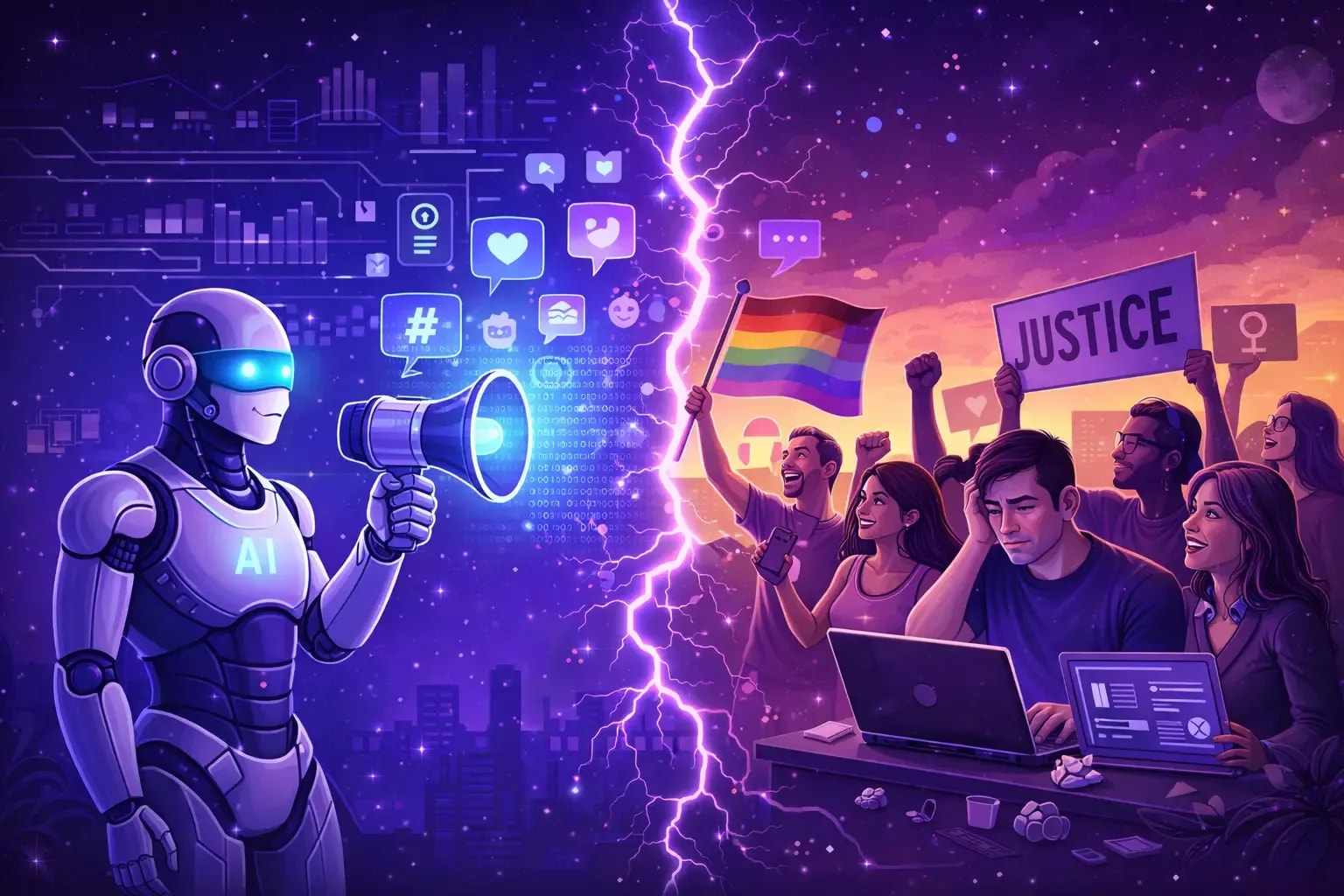
The Speed vs. Meaning Problem in Modern Marketing
Marketing has evolved into a high-velocity discipline where decisions unfold in real time. Artificial intelligence drives this acceleration, enabling brands to analyze consumer data instantly and deploy personalized campaigns at scale. Yet, this speed often comes at a cost: a disconnect from the cultural contexts that make marketing meaningful. Brands chase trends with automated tools, but without deeper insight, they risk superficial engagement that fails to build lasting loyalty.
This tension highlights a core challenge. AI excels at processing vast datasets to predict behaviors and optimize delivery, but it struggles with the nuances of human culture (those shared values, emotions, and societal shifts that define relevance). As a result, campaigns can feel timely yet tone-deaf, amplifying reach without fostering connection. For marketing leaders, the path forward involves balancing AI’s efficiency with cultural awareness to create work that resonates on a human level.
What Are Cultural Moments, and Why They Matter
Cultural moments in marketing are pivotal events, trends, or conversations that capture widespread attention and reflect societal values. These can include global events like the Olympics, viral social phenomena such as Labubu dolls gaining popularity among Gen Z, or awareness periods like Pride Month. They matter because they provide opportunities for brands to align with audience identities, fostering relevance and emotional bonds.
In modern marketing, cultural moments drive consumer loyalty by positioning brands as participants in larger narratives. Research shows that brands engaging authentically in these moments see higher growth; for instance, those with strong cultural resonance grow six times faster than others with low relevance. Ignoring them risks alienating audiences, as silence or missteps can lead to backlash and lost market share.
How AI Is Changing the Speed of Marketing
AI transforms marketing by enabling real-time execution and personalization. Tools analyze consumer behavior instantly, adjusting campaigns on the fly (such as dynamic bidding in ads or tailored content recommendations). This shift allows for hyper-efficient operations, with agentic AI handling tasks like lead scoring or content optimization, reducing human intervention in routine processes.
The result is faster decision-making and scaled personalization. For example, AI-powered platforms like those used by Coca-Cola generate custom ads, boosting engagement by adapting to individual preferences. However, this speed emphasizes volume over depth, where automation prioritizes data signals without always accounting for contextual subtleties.
Why Brands Still Miss Cultural Moments
Despite AI’s capabilities, brands often miss cultural moments due to inherent limitations in technology and strategy.
Automation without cultural context
AI processes data rapidly but lacks innate understanding of cultural nuances. Models trained on broad datasets may overlook regional variations or emotional subtleties, leading to campaigns that feel generic. For instance, automated content generation can produce messages that ignore local customs, resulting in disconnects.
Trend-chasing vs. meaning-making
Brands use AI to detect trends quickly, but this often leads to reactive, superficial responses rather than thoughtful integration. The focus on virality overshadows building meaningful narratives, where AI identifies spikes in engagement without grasping underlying cultural significance.
Over-reliance on data signals
Data-driven AI excels at quantitative analysis but misses qualitative insights like sentiment depth or societal shifts. This creates automation bias, where teams trust outputs without questioning embedded assumptions, potentially amplifying biases from training data.
Lack of human interpretation and lived experience
AI cannot replicate human empathy or lived cultural experiences. Without human oversight, outputs may perpetuate stereotypes, as seen in biased language models that favor certain cultural viewpoints.
Fear-driven or performative brand responses
In high-stakes moments, brands may deploy AI for quick replies, leading to performative actions that lack authenticity. Fear of backlash prompts hasty, data-led decisions that prioritize optics over genuine alignment.
Why do brands miss cultural moments even with AI? Brands miss cultural moments despite AI because technology prioritizes speed and data over contextual empathy, often resulting in automated responses that lack cultural depth and authenticity (40-60 words).
Examples of Brands Missing or Misreading Cultural Moments
Several brands have faltered in cultural moments, highlighting the pitfalls of speed without substance. Dior’s “We Are the Land” fragrance campaign aimed to honor Native American culture but drew accusations of appropriation due to insensitive imagery, despite consultants. The backlash forced a quiet withdrawal, underscoring the need for deeper cultural vetting.
Peloton’s 2019 holiday ad depicted a gift exchange interpreted as reinforcing gender norms, sparking viral parodies and a market cap drop. The well-produced spot missed evolving societal views on body image.
In 2025, a denim ad became controversial, reflecting societal tensions where cultural symbols are decoded differently. These examples show how misreading context, often amplified by rushed, AI-assisted campaigns, erodes trust.
When AI Actually Helps Brands Engage with Culture
AI succeeds when paired with human oversight, enhancing cultural engagement. Coca-Cola’s “Create Real Magic” platform uses AI to let users generate personalized ads with brand icons, fostering emotional connections and buzz.
Nike’s “Never Done Evolving” campaign employed AI for a virtual Serena Williams match, blending technology with storytelling for high impact. Spotify Wrapped leverages AI to create shareable, personalized music summaries, turning data into cultural touchpoints.
These cases demonstrate AI’s role in scaling authentic experiences, where it analyzes behaviors to inform, not dictate, culturally resonant content.
How should AI be used to understand culture? AI should be used to understand culture by analyzing data for trends while relying on human experts for contextual interpretation, ensuring outputs align with diverse values and avoid biases
Framework: Combining AI with Cultural Intelligence
Integrating AI with cultural intelligence requires a structured approach. The Collaborative AI Framework positions AI as a partner: recognize AI’s strengths in mechanical tasks and human advantages in intuitive ones; use lower-level AI to augment higher-level human efforts; elevate human skills as AI automates basics.
A four-layer model includes strategy (defining cultural context for AI), data (incorporating diverse inputs), execution (human-AI collaboration), and measurement (tracking resonance). This ensures AI enhances, rather than replaces, cultural fluency.
Steps include:
- Assess cultural data gaps in AI training.
- Embed diverse teams for oversight.
- Iterate with feedback loops.
This framework drives timely, meaningful marketing.
Metrics for Measuring Cultural Relevance (Beyond Engagement)
Traditional engagement metrics like likes fall short; focus on deeper indicators. These metrics provide a holistic view, prioritizing impact over surface-level data.
| Metric |
Description |
Why It Matters |
| Cultural Resonance Score |
Measures brand’s cultural standing via consumer values alignment. |
Predicts growth; high scores correlate with sixfold increases. |
| Brand Equity |
Combines awareness, loyalty, and perception. |
Reflects long-term value beyond immediate interactions. |
| Sentiment Depth |
Analyzes emotional context in feedback. |
Reveals authentic connections, not just volume. |
| Loyalty Index |
Tracks repeat behaviors and advocacy. |
Indicates sustained relevance over trends. |
| VIBE (Cultural Vibrancy) |
Assesses cultural mark via qualitative-quantitative blend. |
Diagnoses barriers to resonance. |
The Future of AI, Culture, and Brand Relevance
AI will deepen personalization, with agentic systems handling dynamic campaigns. Yet, success hinges on ethical integration, addressing biases and ensuring cultural sensitivity. Future trends include AI analyzing soft power shifts, like Eastern influences in global markets.
Brands must prioritize human-AI collaboration, using cultural intelligence to interpret outputs. As AI evolves, those fostering trust through authentic, context-aware marketing will lead, turning speed into sustainable relevance.
Conclusion: Slowing Down to Connect Better
In pursuing faster marketing, brands risk losing the essence of connection. AI offers powerful tools, but true resonance demands intentional pauses for cultural reflection. By integrating technology with human insight, brands can create campaigns that not only capture moments but also build enduring relationships. The key is balance: leverage speed, but anchor it in meaning.
FAQ
Cultural moments refer to timely events, trends, or conversations that capture public attention and align with shared values, such as viral social movements or global celebrations. They are crucial for brands to demonstrate relevance and foster loyalty, as authentic engagement can drive sixfold growth compared to disconnected campaigns.
Brands often miss these due to AI’s focus on speed over context, including automation without cultural nuance, trend-chasing without meaning, and over-reliance on data signals that ignore emotional subtleties. Factors like team burnout and slow approvals further hinder timely, resonant responses.
AI should analyze trends and data for insights, but pair this with human interpretation to ensure contextual accuracy and avoid biases. Use it for personalization at scale, like generating tailored content, while diverse teams provide oversight for cultural sensitivity.
Mistakes include performative responses driven by fear, lack of human lived experience in interpretation, and ignoring regional variations. This leads to generic or biased outputs that fail to resonate, eroding trust.
Go beyond likes and shares; use metrics like cultural resonance scores, sentiment depth, and loyalty indices to assess alignment with audience values and long-term impact.