Introduction
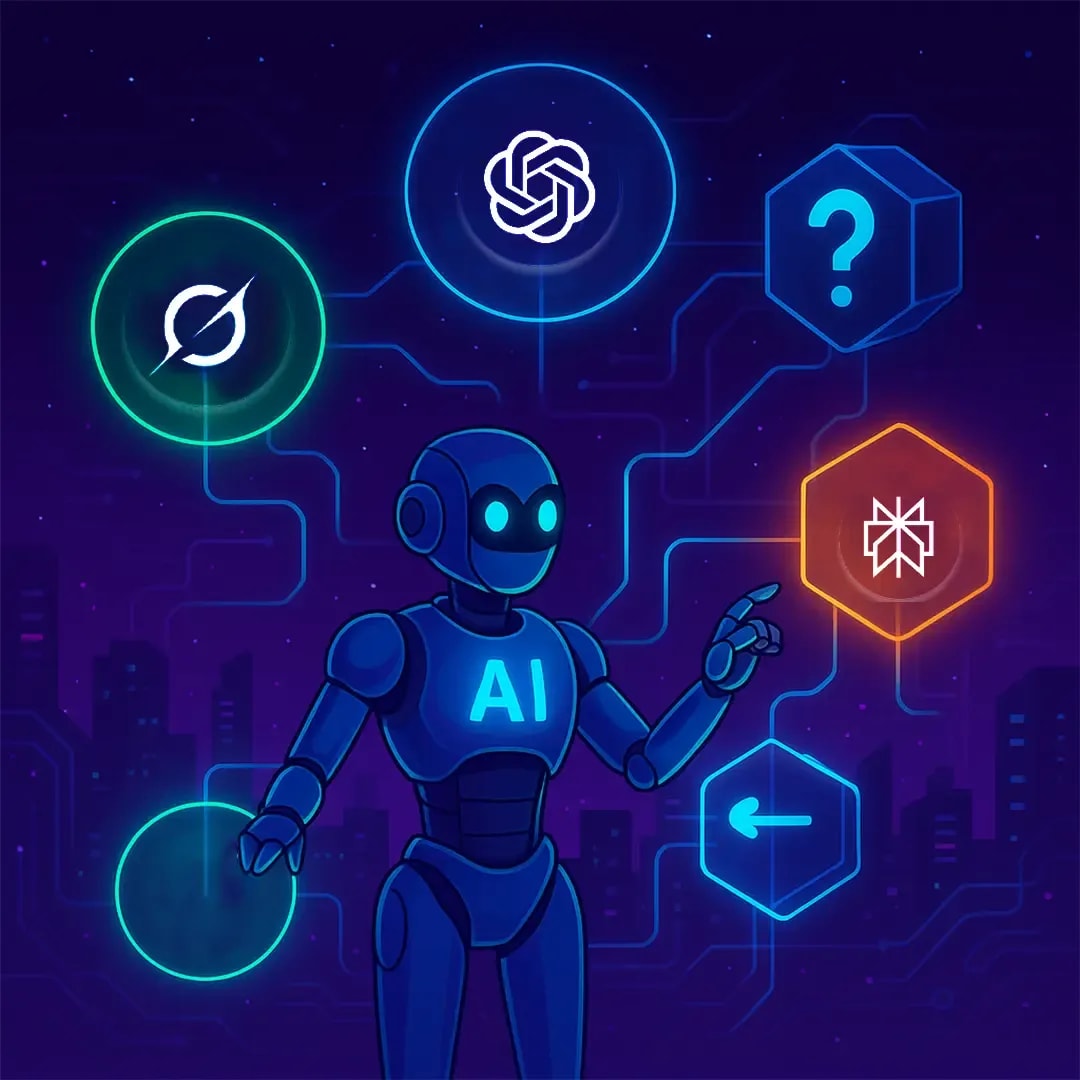
The modern AI landscape is characterized by a proliferation of language and generative models, each with distinct strengths and intended applications. For both everyday users and professionals, switching between these models has become a daily part of digital work and communication. However, this flexibility creates a persistent problem: prompts, instructions, and workflows are often scattered across platforms, chats, and documents, hampering efficiency and leading to unnecessary repetition.
Why So Many AI Models Exist
The rise of multiple AI models stems from divergent training philosophies, competitive innovation, and the need for specialization. Some models are trained on broader data sets, aiming for general utility. In contrast, others narrow their focus to specific tasks, such as technical writing, code generation, or factual retrieval. The field advances rapidly because each new model or system seeks to address particular limitations of its predecessors, and competition among leading companies (OpenAI, Google, Anthropic, and others) accelerates this diversity.
Different training philosophies lead to models that handle language, code, or reasoning in unique ways, reflecting the specific design choices and data sources of their creators.
Specialization exists because no single model can outperform all others in every domain. For example, a model fine-tuned for summarizing medical texts won’t excel at debugging Python code.
Multi-model architectures unlock new capabilities by combining strengths. For instance, one model can generate a narrative, while another can fact-check or verify computations in real time.
Competition fosters rapid innovation and creates a diverse ecosystem—no longer limited to a single “AI brain,” but to a network of specialized tools.
What Each Major Model Does Best
Understanding the strengths of major AI models helps users and teams make informed choices about where to direct their prompts and queries:
| Model |
Distinct Strengths |
| ChatGPT |
Highly conversational, adaptable to diverse prompt styles. Excels at reasoning, creative writing, and extensive Q&A. |
| Gemini |
Integrates language, images, and audio seamlessly. Well-suited for multi-modal queries and synthesis. |
| Claude |
Known for nuanced, context-sensitive conversation and safe, instructional outputs, often favored for professional environments. |
| DeepSeek |
Excels at factual search, synthesis, and technical research integration, emphasizing up-to-date information from broad sources. |
| Perplexity |
Strong at real-time factual research, combining retrieval and generation for instant, well-cited answers. |
| Copilot |
Optimized for code completion, software project scaffolding, and technical documentation, streamlining programming workflows. |
Each model is continually evolving, but their high-level strengths remain clear: some shine in creativity, others in precision, research, or technical work.
Why Everyday Users Switch Between Models
The practical reality for most people is that different models simply “feel” different—they interpret ambiguous instructions differently and show clear strengths or quirks in their output style and speed.
- Every day, digital tasks often require switching: chatting with ChatGPT for creativity, using Perplexity for research, or Gemini for rich content and context, crossing text and media.
- Cost and speed vary: lightweight models can handle routine tasks quickly and cheaply, while larger, more advanced models manage more nuanced reasoning or delicate wording.
- Users also switch to avoid bottlenecks, such as rate limits, formatting constraints, or gaps in capability that one model might have compared to another.
Why Professional and Advanced Users Switch Between Models
Power users, such as researchers, writers, engineers, and creators, switch models not just for convenience but for optimization and reliability.
- Task-based optimization : A prompt designed for code generation might go to Copilot, while technical writing is routed to Claude, and live data synthesis to DeepSeek or Perplexity.
- Output style differences : Cross-model output styles (more technical, more creative, or more concise) matter for the context of the end deliverable.
- Accuracy by cross-verification : Professionals often check key data or narratives across multiple models to reduce the risk of hallucinations or biases, especially for critical or published work.
- Productivity and cost management : Choosing the fastest or least expensive model for repetitive tasks, while leveraging advanced models for deep dives, supports both efficiency and budget control.
The Real Problem: Prompt Fragmentation
With this multi-model workflow, a significant problem emerges: prompts, templates, and ideas get scattered across browser tabs, chat logs, cloud documents, and saved snippets. This prompt fragmentation results in:
- Lost or duplicated work: users spend time recreating prompts or reverse-engineering their previous steps.
- Friction moving from one app or model to another: often manual copy-paste or format conversions.
- Higher cognitive overhead: remembering “best versions” of prompts for each model becomes unwieldy, especially for advanced or repeatable tasks.
How PromptStash Solves the Multi-Model Workflow Problem
PromptStash addresses these issues by offering a centralized prompt library built explicitly for the multi-model era.
- All prompts are stored, organized, and searchable in one place, regardless of the target platform.
- PromptStash supports direct integration (Fetch & Send) with leading models like ChatGPT, Gemini, Claude, DeepSeek, Perplexity, Copilot, and Google AI Studio, reducing the friction of copying and formatting.
- Users can create advanced, placeholder-based prompt templates that adapt to each model’s requirements while avoiding parameter or structural errors.
- This approach helps ensure consistency and minimizes mistakes when switching contexts, benefiting both everyday and professional users who need reliability across their workflows.
- The result is reduced time spent managing prompts and increased flexibility to choose the right model for each task, instead of the other way around.
Real-World Examples
Everyday User Scenario
Emily, a freelance writer, juggles several AI models daily: she brainstorms headlines in ChatGPT, fact-checks with Perplexity, and generates illustrations through Gemini. Before PromptStash, her prompts were scattered in Notes and emails. Now, she stores and reuses her most effective prompts in PromptStash and launches them with a click—regardless of the AI tool chosen for the day’s tasks.
Professional and Creator Scenario
A product manager at a tech firm coordinates content, code reviews, and research. Their team relies on Copilot for technical docs, Claude for structured product specs, and DeepSeek for rapid knowledge graph exploration. PromptStash becomes their single source of truth for all approved prompts, with templates that can be directly adjusted for each model’s input quirks, boosting productivity, compliance, and quality control.
Conclusion
The future of AI interaction is unmistakably multi-model—no one system will fit every purpose or need. While this unlocks unprecedented flexibility and power, it also brings a new layer of complexity as prompts become fragmented across tools and platforms. A solution like PromptStash brings much-needed order, enabling users—from casual creators to enterprise teams—to maintain a single, streamlined workflow regardless of which AI model best fits each task. In this new era, prompt organization evolves from a nice-to-have convenience to an essential foundation for productivity, reliability, and innovation.