Introduction
The integration of artificial intelligence into software development has evolved rapidly over the past few years, marking a profound transformation in how code is conceived, written, and maintained. Early AI tools focused on simple assistance, such as autocompletion or basic code suggestions, but recent advancements have pushed boundaries further. Andrej Karpathy, a prominent figure in AI with experience at Tesla and OpenAI, has been instrumental in framing this evolution. His concepts of Vibe Coding and Agentic Engineering encapsulate the shift from ad-hoc, prompt-driven code generation to structured, autonomous systems. This transition is not merely technical; it signals a fundamental reimagining of software engineering, where human creativity meets AI’s computational prowess to tackle increasingly complex challenges. As enterprises grapple with scaling demands and developers seek efficiency, understanding this pivot is essential for navigating the future landscape.
What Is Vibe Coding?
Vibe Coding refers to a relaxed, intuitive style of programming where developers rely on AI models to generate code based on natural language descriptions, often embracing a “go with the flow” mindset. Coined by Karpathy in February 2025, it involves tools like Cursor Composer paired with models such as Sonnet, where users dictate changes verbally or through prompts, accept AI-generated diffs without deep review, and iterate by feeding back errors. This approach works by leveraging large language models (LLMs) trained on vast code repositories to produce functional snippets or entire applications from vague instructions.
The rapid adoption of Vibe Coding stemmed from its accessibility. It lowered barriers for non-professional developers, enabling quick prototyping of ideas like web apps or games. For instance, Karpathy described building projects where he “forgot the code even exists,” focusing instead on high-level directives. Early productivity gains were evident: developers reported faster ideation cycles, with AI handling mundane tasks like padding adjustments or bug fixes. In practice, this meant turning a weekend hackathon into a deployable product, as seen in examples like MenuGen, an app that visualizes restaurant menus from photos. The appeal lay in its exponential leverage—AI’s growing proficiency made traditional line-by-line coding feel archaic for exploratory work.
Limitations of Vibe Coding
While Vibe Coding sparked excitement, its constraints became apparent as applications grew more complex. A primary issue is the absence of robust planning and system-level reasoning. AI outputs often lack foresight, resulting in code that addresses immediate prompts but fails to integrate seamlessly into larger architectures. For example, generated code might introduce inconsistencies across modules, leading to cascading errors in expansive codebases.
Fragile outputs and context loss further compound problems. LLMs can hallucinate irrelevant or incorrect elements, especially with verbose prompts, producing “garbage code” that dilutes functionality. Studies highlight that longer inputs increase error rates, with up to 64% of outputs including unnecessary parts. Heavy dependence on human supervision is another drawback—users must manually intervene for fixes, undermining the “hands-off” vibe. In real-world scenarios, this manifests as security vulnerabilities from outdated libraries or surface-level correctness that ignores business logic. For enterprises, these limitations make Vibe Coding unsuitable for production environments, where reliability and maintainability are paramount.
Introducing Agentic Engineering
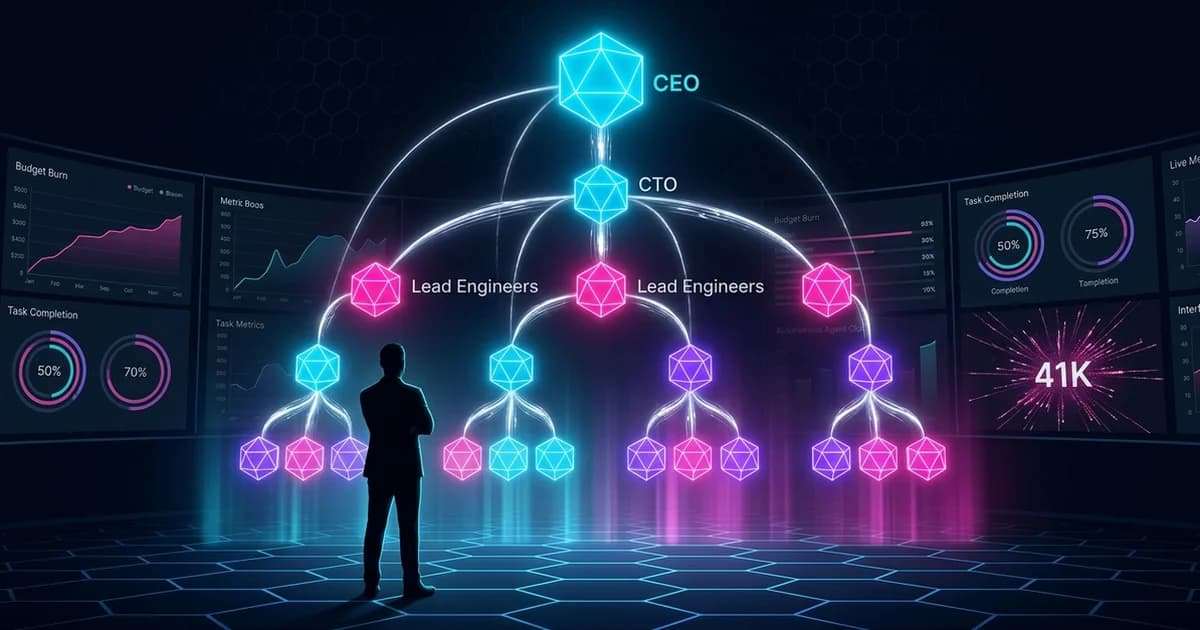
Agentic Engineering builds on Vibe Coding’s foundations but introduces discipline and autonomy. Defined by Karpathy as the “next evolution,” it positions developers as overseers orchestrating AI agents that handle end-to-end tasks. In practical terms, an AI agent plans software systems by breaking down requirements into subtasks, writes and refactors code, tests functionality, and iterates based on feedback—all with minimal direct input.
These agents decompose problems logically: for a feature request, they might first outline dependencies, then generate code segments, validate against tests, and refine for optimization. This contrasts sharply with traditional AI assistants, which react to single prompts without proactive adaptation. Agentic systems use advanced LLMs for reasoning, incorporating tools like search or external APIs to gather real-time data. The result is more reliable outputs, as agents self-correct through loops, addressing Vibe Coding’s fragility.
How Agentic Engineering Changes Software Development
Agentic Engineering shifts paradigms from code generation to holistic system construction. Instead of isolated prompts yielding fragments, agents manage long-running processes, building complete applications proactively. This moves development from reactive assistance—fixing errors as they arise—to execution where agents anticipate needs.
For developers, the role evolves from coder to supervisor. Humans define goals and constraints, while agents handle implementation, freeing time for strategic design. This enhances productivity: benchmarks show agents completing features 252 times faster than manual workflows. Software quality improves through built-in testing and iteration, reducing bugs. However, it demands trust in AI decisions, balanced by human review to ensure alignment with intent.
Architecture Behind Agentic Engineering
At a high level, Agentic Engineering relies on layered architectures that mimic human cognition. The planning layer uses LLMs to decompose tasks into graphs of subtasks, sequencing actions like “analyze requirements” before “generate code.” Memory management retains context across steps, storing intermediate results to inform future decisions and prevent redundancy.
Tool usage integrates external capabilities, such as code repositories or debugging utilities, via APIs. Feedback loops enable self-correction: if a test fails, the agent replans without human input. Validation cycles incorporate automated testing, ensuring outputs meet standards. This accessible structure avoids academic complexity, focusing on practical modularity for real-world deployment.
Implications for Engineers and Teams
Engineering roles will evolve significantly under Agentic Engineering. Developers shift toward orchestration skills, like crafting effective prompts and evaluating agent outputs. New competencies include understanding AI psychology—navigating hallucinations or biases—and agent management. Productivity surges, with AI handling 70-80% of routine code, but this raises risks: over-reliance could erode core skills, and autonomous systems introduce accountability challenges for errors.
Teams benefit from faster cycles and higher quality, yet must address governance. Human-in-the-loop remains crucial for ethical oversight, ensuring AI aligns with organizational values. Overall, this empowers engineers to tackle ambitious projects, though it demands adaptation to avoid obsolescence.
Enterprise and Industry Impact
Enterprises are drawn to Agentic Engineering for its promise of accelerated development. By automating workflows, it reduces bottlenecks, enabling quicker market responses. For instance, multi-agent systems can coordinate across departments, from planning to deployment, cutting project timelines.
However, governance is key. Safety considerations include bias mitigation and secure data handling, with human oversight preventing unchecked autonomy. Reduced operational costs appeal to leaders, but integration requires upskilling. Industry-wide, this fosters innovation, though it necessitates standards for interoperability and ethics.
Future Outlook
Over the next 2-5 years, Agentic Engineering could enable breakthroughs like self-evolving software or AI-led R&D. Organizations may restructure around agent teams, with humans in advisory roles. As systems handle greater complexity, this shift becomes inevitable, driven by scaling demands. Yet, it complements rather than replaces human ingenuity, amplifying potential in an increasingly digital world.
Conclusion
Agentic Engineering marks a foundational shift, evolving Vibe Coding’s spontaneity into a robust framework for software creation. Far from displacing engineers, it redefines their contributions, emphasizing strategy over syntax. As AI matures, this model provides a clear path forward, equipping teams to build resilient, innovative systems.
FAQ
About the Author

Aravind Balakrishnan
Aravind Balakrishnan is a seasoned Marketing Manager at lowtouch.ai, bringing years of experience in driving growth and fostering strategic partnerships. With a deep understanding of the AI landscape, He is dedicated to empowering enterprises by connecting them with innovative, private, no-code AI solutions that streamline operations and enhance efficiency.